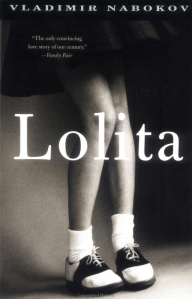
I first picked up Vladimir Nabokov’s Lolita because of my 100 Greatest Novels project. I knew its reputation: beautiful prose, impossible subject matter. I assumed the experience would be academic. I would admire the sentences from a safe distance and return it to the shelf.
Instead, it broke something in me. Not because I sympathized with Humbert Humbert, the novel’s monstrous narrator, but because for two hundred pages, I found myself doing something I did not want to do. I was understanding him.
Nabokov forces you into the mind of a man you would cross the street to avoid. He gives Humbert wit, vocabulary, charm, and a voice so seductive that you have to actively resist being pulled into his justifications. The experience is deeply uncomfortable. And it taught me something I now carry into every piece of marketing I write. Empathy is not the same as agreement.
The Customer Who Does Not Exist
In marketing, we talk about empathy constantly. Understand your customer. Get inside their head. Speak their language. But in practice, we often do something lazier. We write for the customer we wish existed: the rational, discerning shopper who appreciates our clever turns of phrase. That customer is a fiction.
Real customers are anxious, distracted, occasionally irrational, and often driven by desires they would not articulate in polite company. If you only empathize with the parts of a customer you admire, you are not empathizing. You are congratulating.
Nabokov understood that the most powerful persuasion happens when you occupy a perspective fully, not to endorse it, but to inhabit it long enough to understand its internal logic. I try to bring that discipline to marketing. I do not need to agree with a customer’s fears to write copy that acknowledges them. I do not need to believe that status anxiety is noble to understand that it drives purchasing decisions. Good copy does not lecture. It meets people where they actually are, not where they ought to be.
What This Looks Like on the Page
Here is what this looks like in practice. When a client says their audience is sophisticated, I do not write clever. I write with precision. When I am writing for a product that solves a mundane problem, I do not pretend the problem is heroic. I acknowledge the annoyance directly. When a buyer is making a fear-based decision, I do not ignore the fear. I name it quietly, then offer the alternative.
Lolita is an extreme case. I am not suggesting copywriting requires plumbing the depths of human depravity. But the principle scales down. Most copy fails not because it is poorly written, but because it is written for a version of the customer that does not exist. It sanitizes. It assumes people are more rational and more noble than they actually are.
The best copy I have written came from moments when I stopped trying to make the customer sound smart and started trying to actually listen, even when what I heard was uncomfortable. Nabokov once wrote that the reader’s sympathy is a treacherous ally. He meant that a writer who seeks easy sympathy loses something essential. In marketing, the same is true. If you only write what is comfortable, you will never write anything that actually connects.
I am currently looking for a copywriting role where I can bring this kind of human-centered thinking to brands that want to genuinely connect with their audiences. If this resonated with you, view my portfolio or reach out. I would love to talk about what empathy looks like for your brand.
 Tyson Peveto