A translator sits with a sentence in Korean, Japanese, or Italian and faces a hundred possible English versions. One is literal. One captures the rhythm. One preserves the emotional weight. The translator cannot have all three so a choice has to be made.
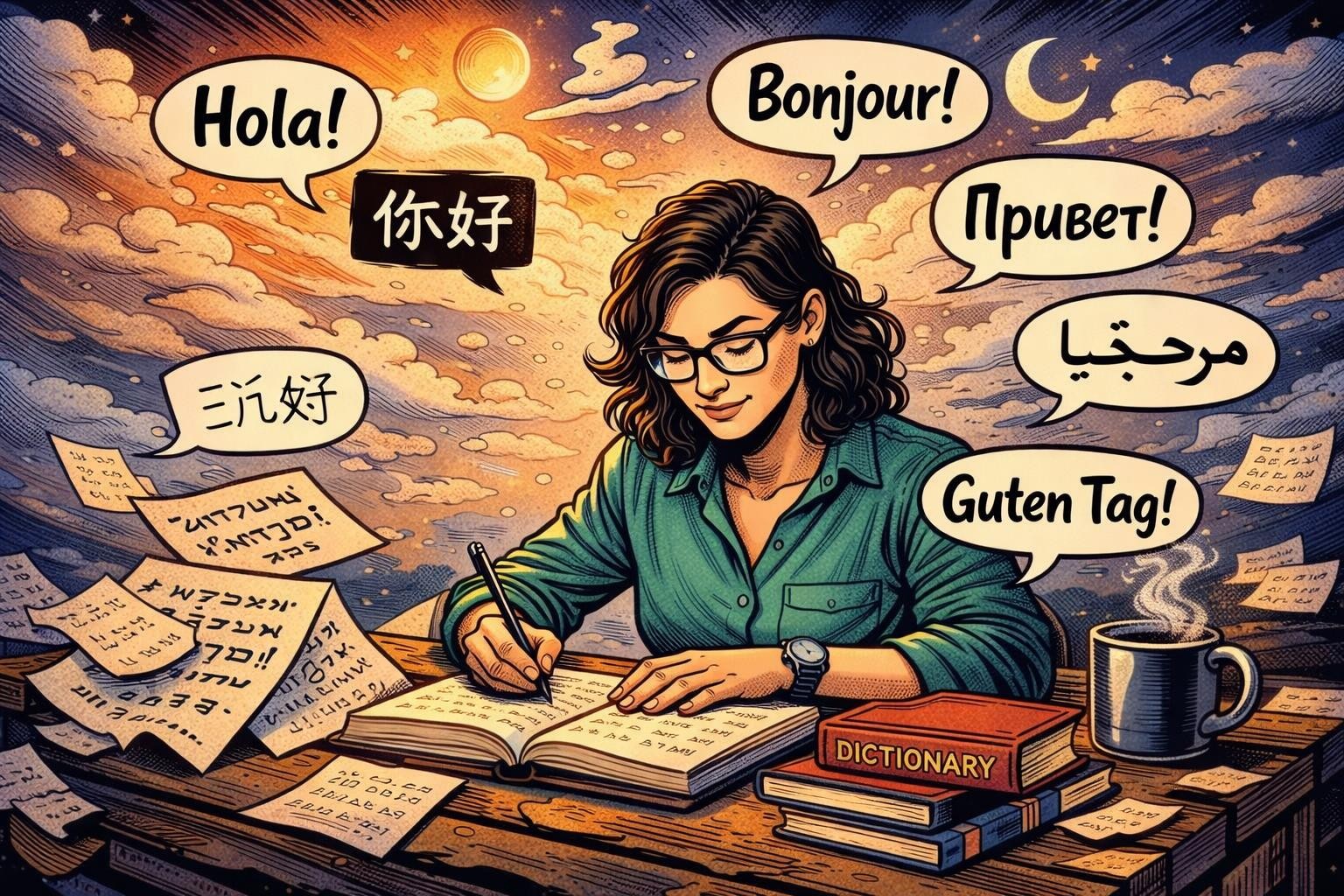
Deborah Smith, who translated Han Kang‘s The Vegetarian and Human Acts, faced this constantly. A single word in Korean might become three words in English. A polite formality might have no direct equivalent. A cultural reference might mean nothing to an English reader. Smith chose to prioritize feeling over accuracy in some places and accuracy over flow in others. The result won the Man Booker International Prize. It also sparked debate, and that debate is the point. Translation is a series of trade-offs, not a search for a single correct answer.
The Trade-Offs of Tone
In Elena Ferrante’s Neapolitan Novels, the English translator Ann Goldstein had to decide how formal the characters should sound. Neapolitan Italian has layers of politeness and class that English does not easily capture. Too formal and the characters feel stiff. Too casual and the class tensions disappear. Goldstein landed somewhere in the middle. Every line of dialogue reflects that choice.
Copywriting requires the same trade-offs. A brand voice is not a set of absolute rules. It’s a series of decisions about what matters most. Formal or casual. Playful or serious. Short sentences or long ones. Warm or professional. You cannot have all of them at once. A luxury brand that sounds like a friend is confusing. A startup that sounds like a bank is lying.
So the copywriter has to choose what serves the reader and the moment.
What the Translator’s Dilemma Teaches
Reading Robin Buss’s translation of The Count of Monte Cristo, I noticed how he handles Dumas’s nineteenth-century French. The sentences are long but never exhausting. The vocabulary is rich but never showy. Buss could have made the novel sound older, more Victorian, more like a museum piece. He chose to make it feel alive instead.
That is the translator’s gift. They hear what the original is trying to do and find an English version that does the same thing, even if the words are different. A translator who added flair would have destroyed the book. Buss understood that the job was to get out of the way.
Most copywriters do the opposite. They add flair where none is needed. They assume plain means boring and try to spice things up. The translator knows better. The goal is never to add your own voice but to serve the voice that is already there.
I am currently looking for a copywriting role where I can bring this kind of tonal precision to brands that understand voice as a series of intentional trade-offs. If you need someone who can hear the difference between formal and cold, playful and unprofessional, warm and needy, view my portfolio or reach out. I would love to talk about what your brand sounds like when every word is a choice.
 Tyson Peveto