
So I’ve never done this before, spotlighting a single author’s work. There’s not often when I come across an author, I immediately need to rush through their whole bibliography. Also, if something like that happens, it’s not often that the author doesn’t seem to be read or even known by many readers.
That last sentence might seem unbelievable since Han Kang won the International Booker Prize in 2016 for The Vegetarian and was also awarded the Nobel Prize in Literature just last year. And it’s true that when I talk to people about Han Kang, many have at least heard of The Vegetarian (but none having read it).
Anyway, let me first discuss Han Kang’s writing in general. Then, I’ll discuss the individual works. If you like to go into books somewhat blind, hopefully, the first bit is sufficient to inspire you to check her out. I read each novel with little to no knowledge of what the books would be about, and I think they had more impact on me because of that.
So Han Kang is a South Korean author born in 1970. She’s been publishing since 1995, with her first being a collection of short stories (only published in Korean). Her first novel to be translated into English was The Vegetarian in 2015, which quickly led her to international attention. She was the first Korean writer to be nominated for the International Booker Prize, with The Vegetarian becoming the first Korean language novel to win.
Since then, she’s had four more of her 11 novels translated to English: Greek Lessons, Human Acts, The White Book, and, published just this year, We Do Not Part.
Her novels are poetic, emotional, and sometimes violent. Many dark parts of Korean history — massacres of student demonstrators, destruction and mass murder of Jeju villages, government-sanctioned disappearance of bodies — play a large part in her writing.
But no novel directly tells these stories. Instead, they tell personal stories of long-time friends and their need for connection, artists’ unique sources of inspiration, the death of newborn siblings, the loss of language and sight, grief and mental health, and every other aspect of human fragility.
Are you reading about a bird that might or might not be dead? Or are you reading about a character’s family connection to mass murder? Are you reading poetry on the color white or delving into the gaping hole of loss of a character? When you’re reading Han Kang, you never really know. And that’s why it’s beautiful.
So, onto the individual novels. I’m not sure if there’s a particularly better order to read them in, but I’ll suggest one below.
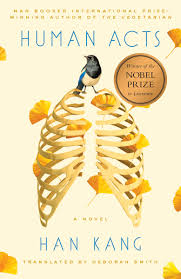
First, start with Human Acts. Dealing with the violent military suppression of the student-led demonstrations in 1980 against the coup of 1979 that led to the installation of a military dictatorship, this novel follows the death of a young student named Kang Dong-ho, and the events surrounding his death and the impact on others. As you read, you follow the spirit of Dong-ho as he, unseen and unheard, interacts with those who grieve after him.
I believe this novel captures how incredibly Han Kang intertwines brutal history with emotional personal stories, how her poetic writing can simultaneously obscure the violence and punch you in the gut with savagery.
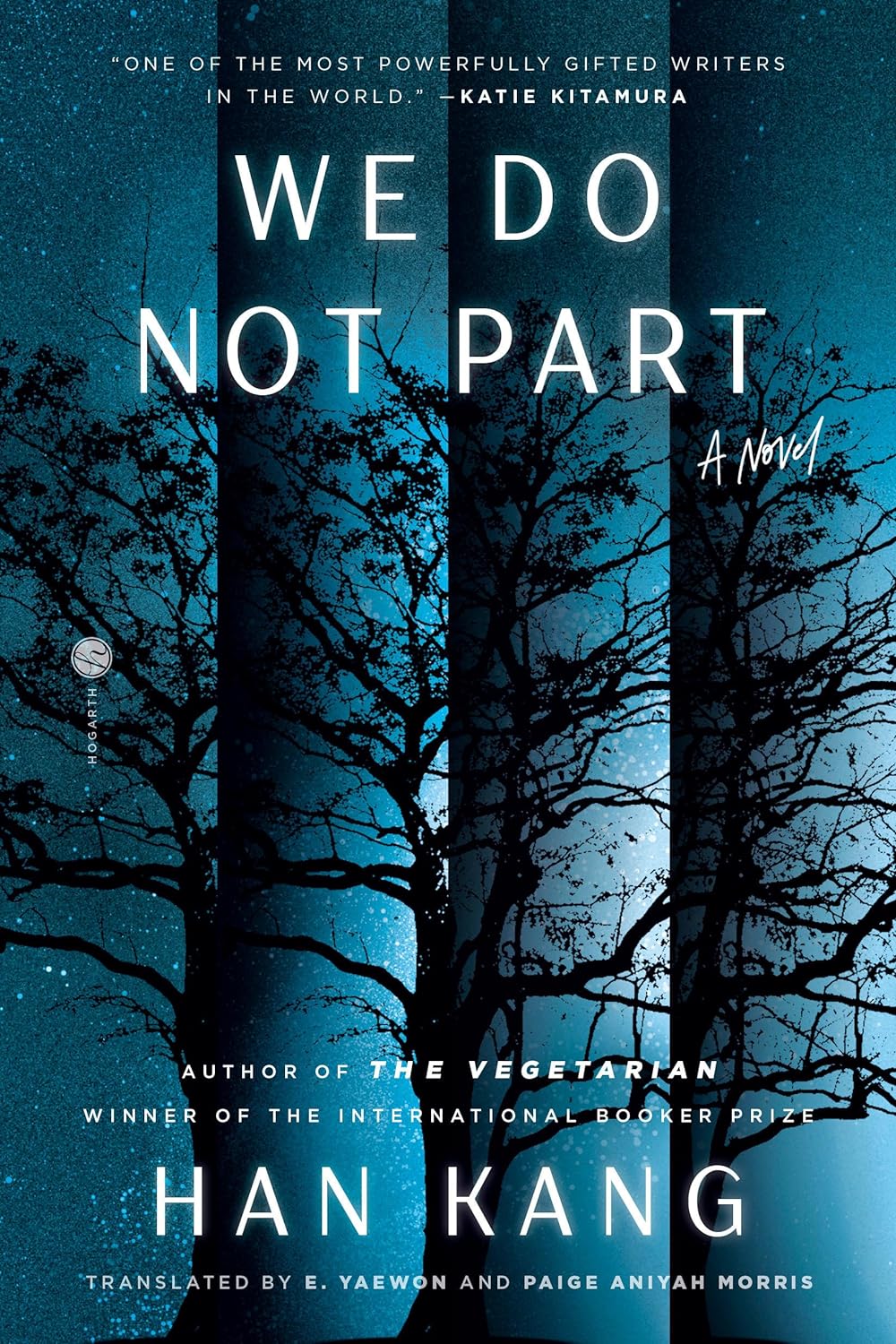
If you want to continue sitting in a similar uncomfortable conversation with history, I would recommend next reading We Do Not Part. This is the emotional sibling to Human Acts, dealing with another government-sanctioned massacre in Korean history, but this time on Jeju Island. Both novels have a touch of magical realism, with this one making you question what’s real, what’s dead or alive, and where actually are characters located. All while deeply reflecting on the destruction and mass murder of Jeju villages and the legacy left behind.

Depending on if you needed a break from the violence or not, you could read The Vegetarian before or after We Do Not Part. Told in three parts, with each having a different narrator, this novel begins with the main character becoming a vegetarian and how this impacts those around her. First, her husband doesn’t understand. He gets mad at how he is no longer allowed to eat meat at home and how his wife’s decision could affect his employment. He finally brings in his wife’s family for help, which makes things spiral more out of control.
The second part is about the vegetarian’s sister’s husband. He is a visual artist who gets hyperfixated on a supposed birthmark that the vegetarian has. He begins to visualise a love-making scene of two people covered in painted flowers, one being the vegetarian and her birthmark, which begins to affect his home life as he relentlessly pursues capturing the images he sees in his head. The last section focuses on mental health, and the writing becomes more poetic and less realistic.
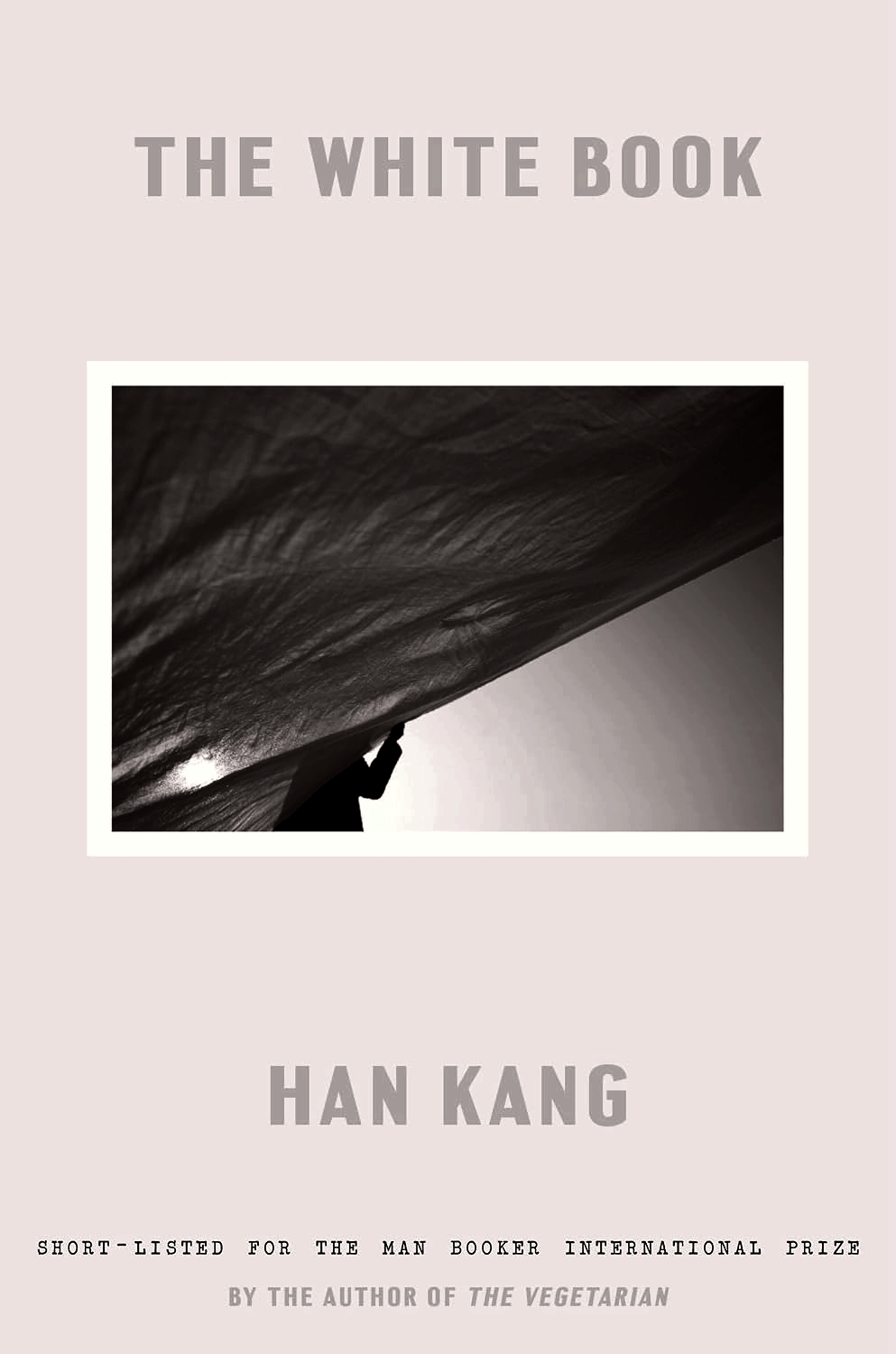
The White Book was actually the first Han Kang novel I read. Well, it’s considered a novel but I felt like I was more reading poetry. Containing short excerpts (sometimes consisting of only a few words), the book meditates on the color white and numerous objects that are white, all while contemplating the death of the narrator’s sister two hours after she was born. It’s really a beautifully written work of art.
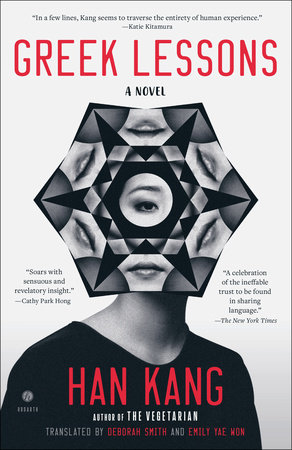
The only other novel of her’s translated to English is called Greek Lessons. While I really enjoyed this one, the odd structure, unclear narrative, and focus on languages (and the loss of), might make this difficult for some readers. A mute woman is mentally and physically impacted by languages. The learning of one Korean word first made her mute, the learning of French gave her her speaking back, until she loses her ability to speak again. The Greek teacher is losing his sight. By the end, they are intimiately and uniquely connected in a conversation you cannot see or hear.
In conclusion, read Han Kang. Read all of Han Kang. Let me know what you think.
 Tyson Peveto
Very well written review- definitely makes me want to read her writings.